Guanyin Statue
Guanyin Bodhisattva is one of the four great bodhisattvas in Chinese Buddhism. According to legend, his birthday is on the 19th day of the second lunar month, the day of enlightenment is on the 19th day of the sixth lunar month, and the day of Nirvana is on the 19th day of the ninth lunar month. It is said that the Taoist temple is Mount Putuo. The belief in Guanyin has had a profound influence in China, leading to various folk legends about Guanyin Bodhisattva, such as the widely circulated belief that Guanyin is Princess Miaoshan, the third princess of King Miaozhuang of Xinglin Kingdom. This kind of female Guanyin legend can first be seen in Zhu Ben's "Qu Yu Jiuwen" during the Song Dynasty. Afterwards, Guan Daosheng's biography "Biography of Guanyin Bodhisattva" became a complete biography during the late Song and early Yuan dynasties.

Guanyin Statue
Guanyin Bodhisattva is one of the four great bodhisattvas in Chinese Buddhism. According to legend, his birthday is on the 19th day of the second lunar month, the day of enlightenment is on the 19th day of the sixth lunar month, and the day of Nirvana is on the 19th day of the ninth lunar month. It is said that the Taoist temple is Mount Putuo. The belief in Guanyin has had a profound influence in China, leading to various folk legends about Guanyin Bodhisattva, such as the widely circulated belief that Guanyin is Princess Miaoshan, the third princess of King Miaozhuang of Xinglin Kingdom. This kind of female Guanyin legend can first be seen in Zhu Ben's "Qu Yu Jiuwen" during the Song Dynasty. Afterwards, Guan Daosheng's biography "Biography of Guanyin Bodhisattva" became a complete biography during the late Song and early Yuan dynasties.
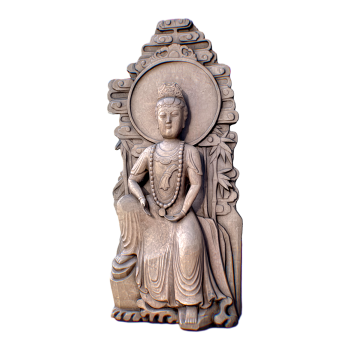
【 Wood Carving 】 Avalokitesvara Bodhisattva (3D printable)
Avalokitesvara Bodhisattva, also known as Avalokite ś vara in Sanskrit, is a transliteration of the Sanskrit word Avalokite ś vara. It is also translated as "Avalokitesvara" or "Avalokitesvara" and transliterated as "Avalokitesvara" or "Avalokitesvara". Amitabha Buddha's left attendant, one of the "Three Saints of the West". Buddhism believes that Avalokitesvara Bodhisattva is a compassionate and benevolent bodhisattva. When suffering beings recite his name, the Bodhisattva immediately observes his voice and goes to save and liberate them, hence the name. During the Tang Dynasty, due to the taboo of using the name of Emperor Taizong Li Shimin, the character "shi" was removed and he was briefly referred to as "Guanyin".

Ming Dynasty Tibetan Green Tara Statue
The Tibetan style Green Tara statue from the Ming Dynasty is a 15th century Ming Dynasty artwork, currently collected at the Minneapolis Museum of Art in the United States. Green Tara is the incarnation of Avalokitesvara Bodhisattva. Tara, also known as Tara in Sanskrit, is the full name of Saint Salvation Tara Buddha Mother. In ancient China, she was referred to as Tara Bodhisattva or Tara Guanyin. Tara has many different manifestations, including 21 Tara, 500 Tara, and others, all of which are incarnations of Avalokitesvara Bodhisattva. Green Tara is the main deity of all Tara, capturing all the merits of the other 20 incarnations.

Nanhai Guanyin Bodhisattva Buddha Statue Standing Statue Guanyin Bodhisattva Dehua White Porcelain

The plaster statue of Avalokitesvara Bodhisattva sitting in Pakistan in the third century
This statue, known as the seated statue of Avalokitesvara Bodhisattva, was made in the 3rd to 4th century AD and originated from Pakistan. It is currently housed in the Jingci Art Museum and is made of plaster material. This sitting Avalokitesvara Bodhisattva wears a tall Tibetan style crown on his head, earrings hanging from his earlobes, his eyes slightly closed, and he meditates with a calm and relaxed facial expression, showcasing the unique charm of the plaster statue.

The Golden Wood Carving of Compassionate Avalokitesvara from the Jin Dynasty
This Bodhisattva statue is a cultural relic in Shanxi Province, China, from the Jin Dynasty, around 1200 AD. Its name is "Avalokitesvara of Mercy". The decoration of the statue is very fine, made of wood, with traces of gold and multi-color on it. The statue is the image of the Bodhisattva of Guan Shi Yin, who is the Bodhisattva of compassion. Bodhisattvas are the central element of Mahayana Buddhism. They are people who have reached a high degree of enlightenment. They help others to reach enlightenment and postpone their own enlightenment on the road to Buddhism. This work shows two intertwined dragons and a remarkable necklace. This statue is now in the Museum of Art History in Brussels, Belgium.

Painted Wood Carving of the Northern Song Dynasty "Eleven-sided Guanyin Bodhisattva"
"Eleven-sided Guanyin Bodhisattva" is a wood carving art from the late Northern Song Dynasty to the Jin Dynasty in China. It is currently in the Cleveland Museum of Art. The sculpture is 218.5cm high and is carved from willow made of painted and cut gold. This statue is the Avalokitesvara in Buddhism, symbolizing the Buddha's steps to enlightenment. The historical and artistic value of sculpture is very high, and it is the treasure of ancient Chinese art. It shows the carving techniques of the Song Dynasty, reflecting the religious beliefs and aesthetic concepts of the time.

Minneapolis Art Museum Plaster Statue of Guanyin Bodhisattva of the Northern Song Dynasty

Popular Models
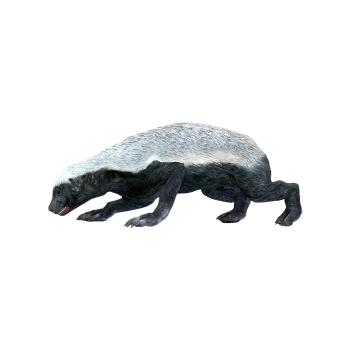
Honey Badger (3D animated model)
194 View
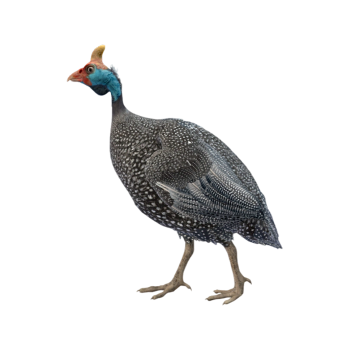
Guinea fowl (3D animated model)
165 View
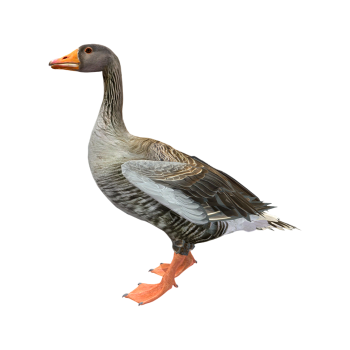
Wild Goose (3D animated model)
187 View

Red Fox (3D animated model)
155 View
Random Model


Porsche 911 Turbo (996) sports car
980 View

"Strange Things" intercom
1046 View

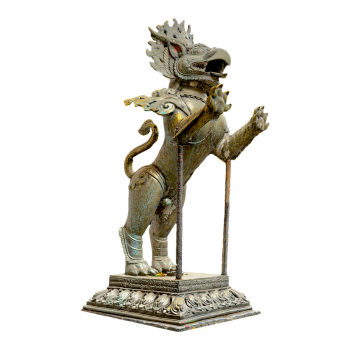

Harpa major
1099 View